Eternal Engines

Advanced Power Systems

Compact modular engine platforms delivering high output, low weight, multifuel capabilities, and exceptional endurance for advanced field operations.

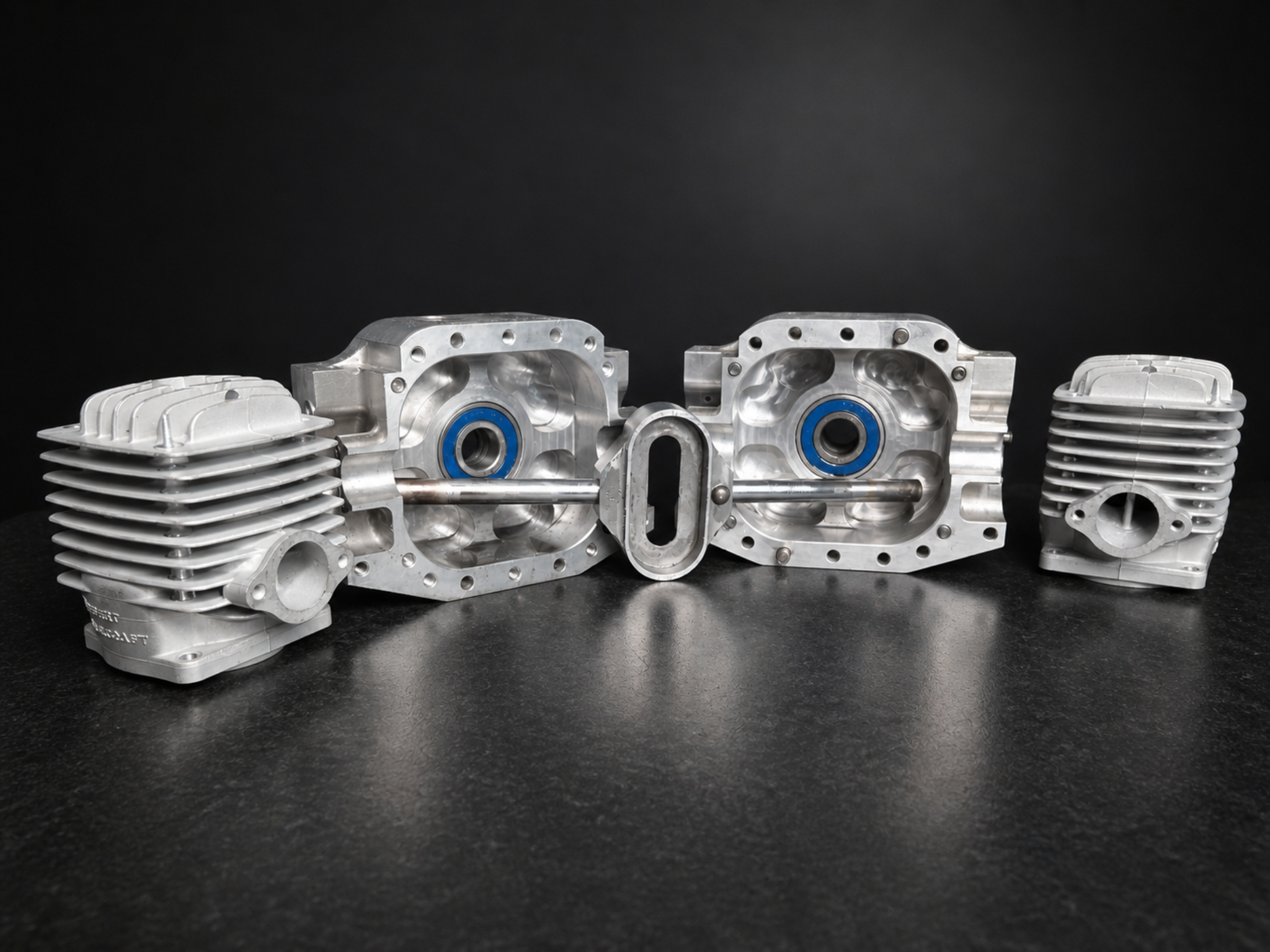
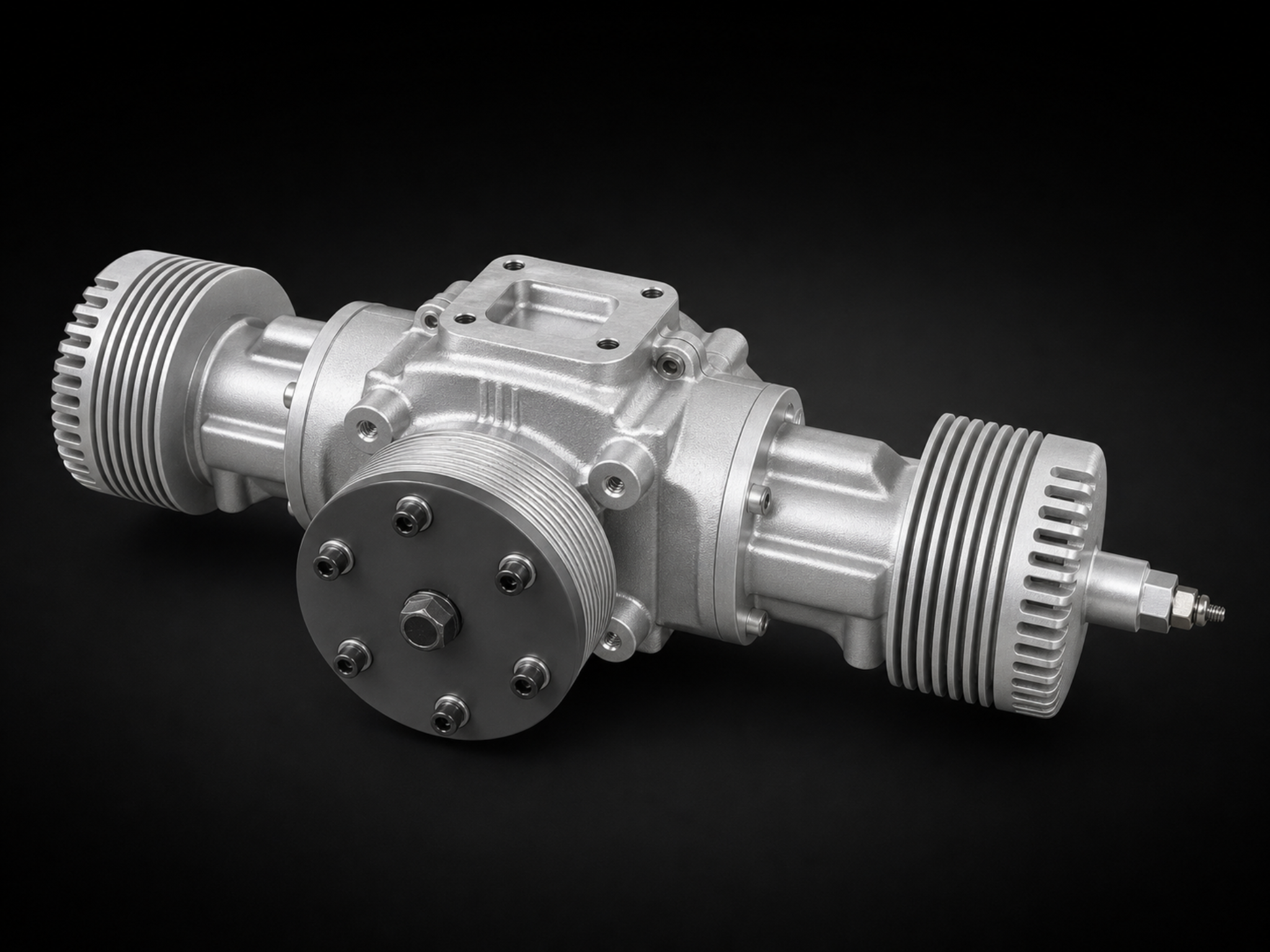
Eternal Engines engine platform prototype

Power-system selection still governs endurance, payload, cost, supportability, and integration. Every pound of fuel, every support subsystem, every maintenance event, and every watt of auxiliary load changes what the system can carry, how long it can stay useful, and how much effort it takes to keep deployed.

Energy Density

Battery systems remain range-constrained

Lifecycle Cost

Turbines increase acquisition and service burden

Platform Burden

Legacy platforms demand support systems that add mass and complexity

Fuel Availability

Specific fuel dependence narrows deployment options

The platform centers on direct mechanical motion and persistent catalytic ignition, built for installation, service, and operating flexibility.

Scotch-Yoke Motion

Straighter force transfer. Fewer conventional compromises.

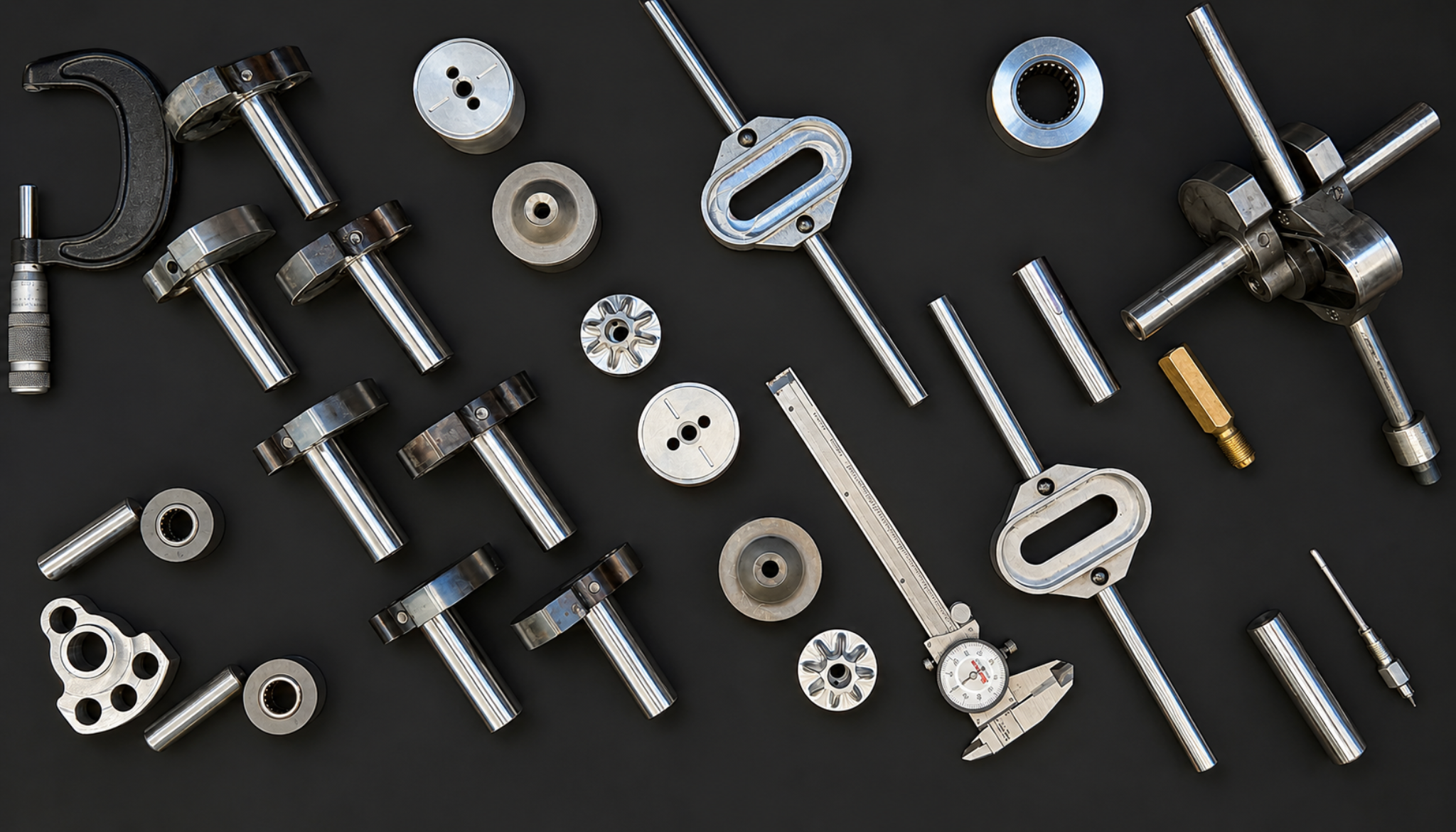
The core motion system replaces conventional crank-and-rod geometry with a scotch-yoke architecture. Straighter force transfer, compact packaging, and a simplified motion path give the platform a mechanical foundation built for severe operating conditions.


Scotch-yoke motion components and machined engine internals

Catalytic Ignition

A standing ignition condition, not a spark attempt.

Catalytic ignition replaces a brief electrical discharge with a continuously hot, chemically active surface. Fuel-air mixture reaches an ignition source that is already active. Cold starts, poor vaporization, lean operation, altitude, wet conditions, and abrupt fueling transients all move inside a wider ignition envelope.

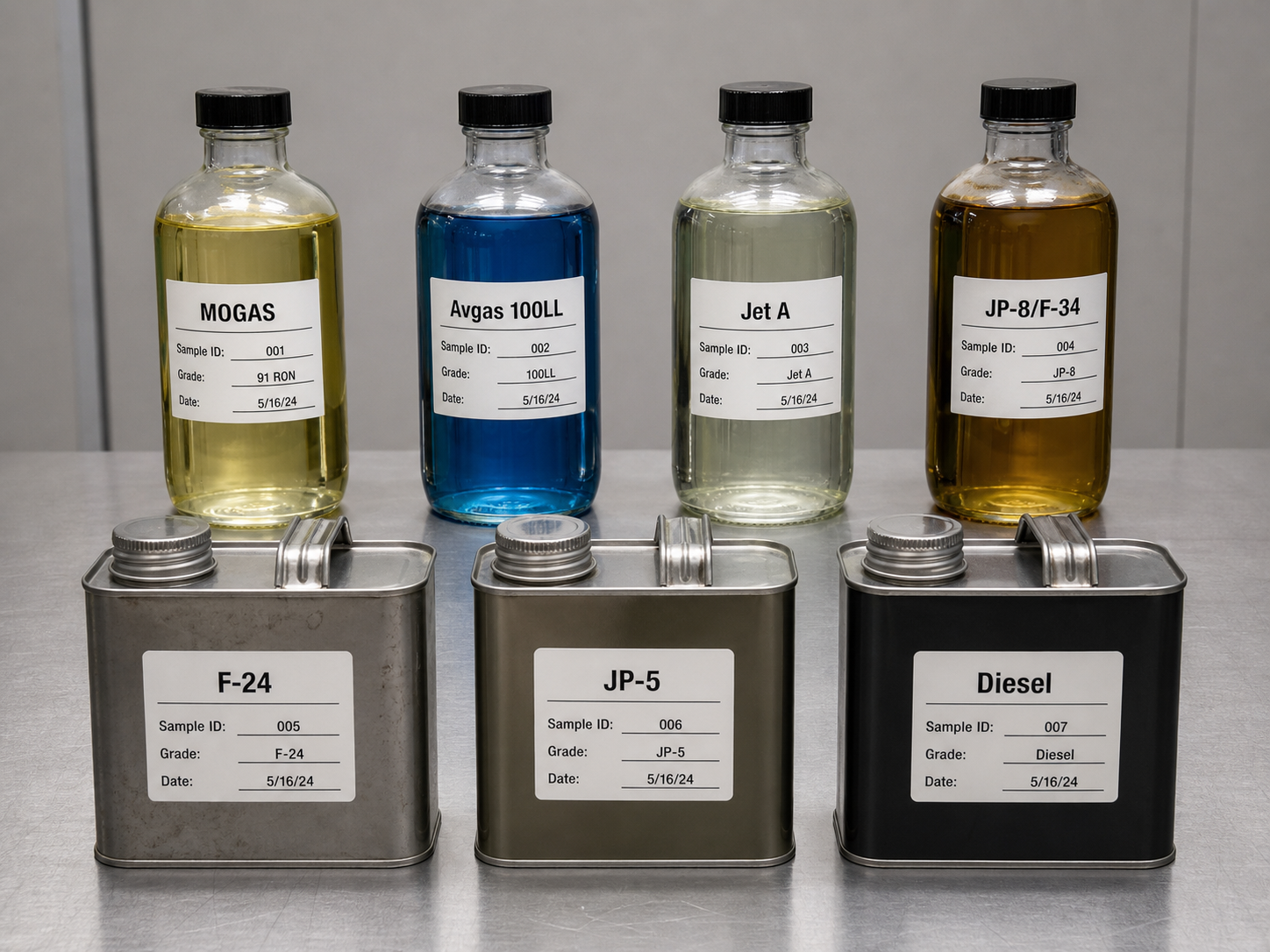
This architecture supports true multifuel operation across refined light hydrocarbons already common in military and civil use, including JP-8/F-34, F-24, JP-5, Jet A/Jet A-1, avgas 100LL, suitable MOGAS, and diesel-range fuels within specification.

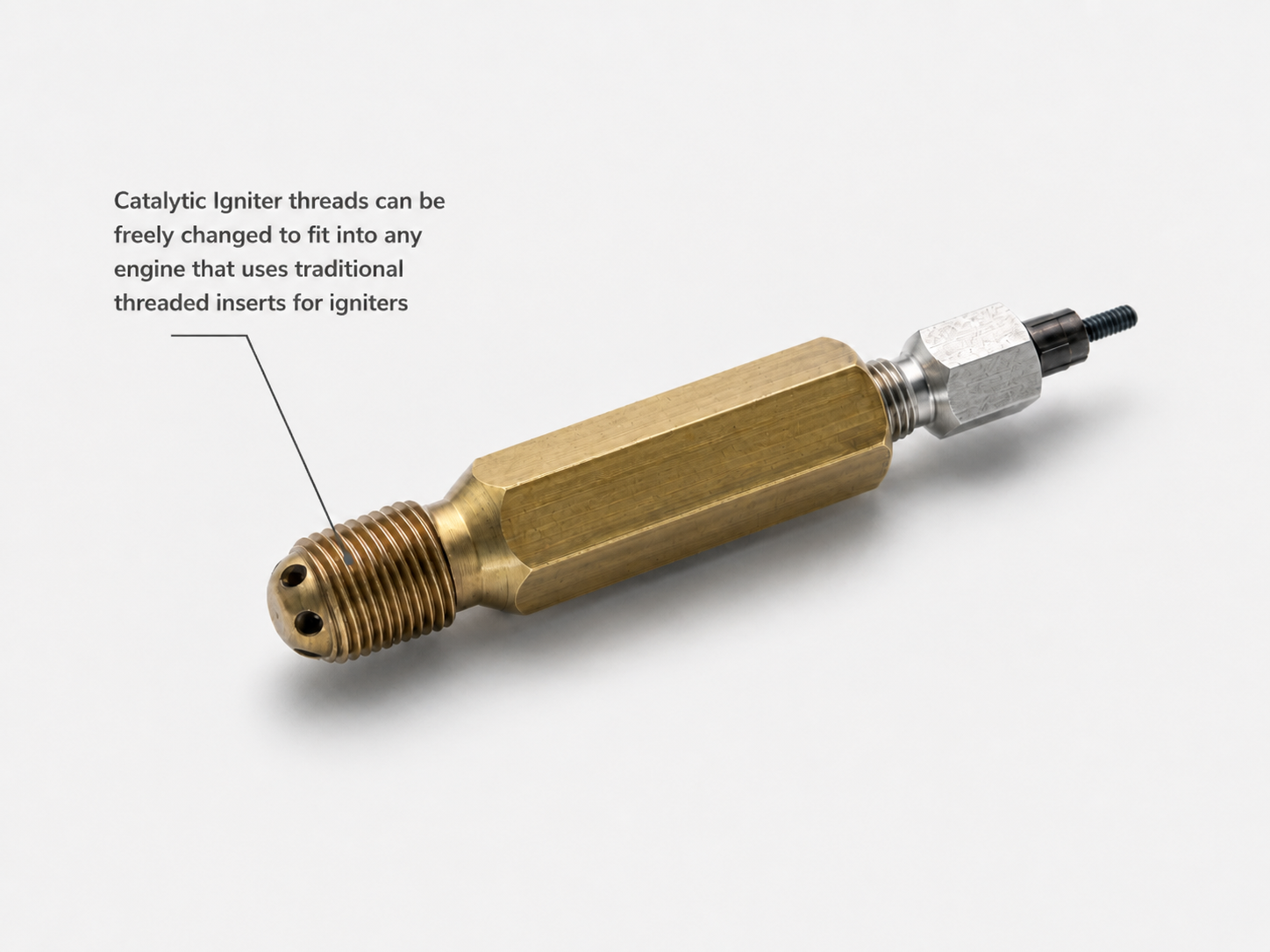
Catalytic ignition plug hardware with brass body on dark surface

Serviceable Modular Design

Built to install, overhaul, and return to service.

The engine is developed as a compact module with controlled mounting geometry, shared architecture, and service access built into the hardware. Aircraft, remote-power, and stationary-power installations get a clearer integration path without turning every deployment into a custom engineering project.

Field service is designed into the engine. An experienced mechanic can overhaul the unit in less than 30 minutes with a limited set of standard tools. An inexperienced layperson can be trained in less than two days to complete the same overhaul in less than one hour.

Serviceable modular design components laid out for inspection

3

Consecutive seizure events

~8,000

RPM severe event speed

<0.5

Rev stop window

9,600

RPM encoder-verified operation

100+

Hours same crank/yoke runtime

Repeated seizure events demonstrated platform robustness and validated the core architecture under severe mechanical shock. Hardware, sensor data, and configuration-controlled records anchor the evidence trail.

Seizure event evidence comparison showing pistons and yoke after seizure
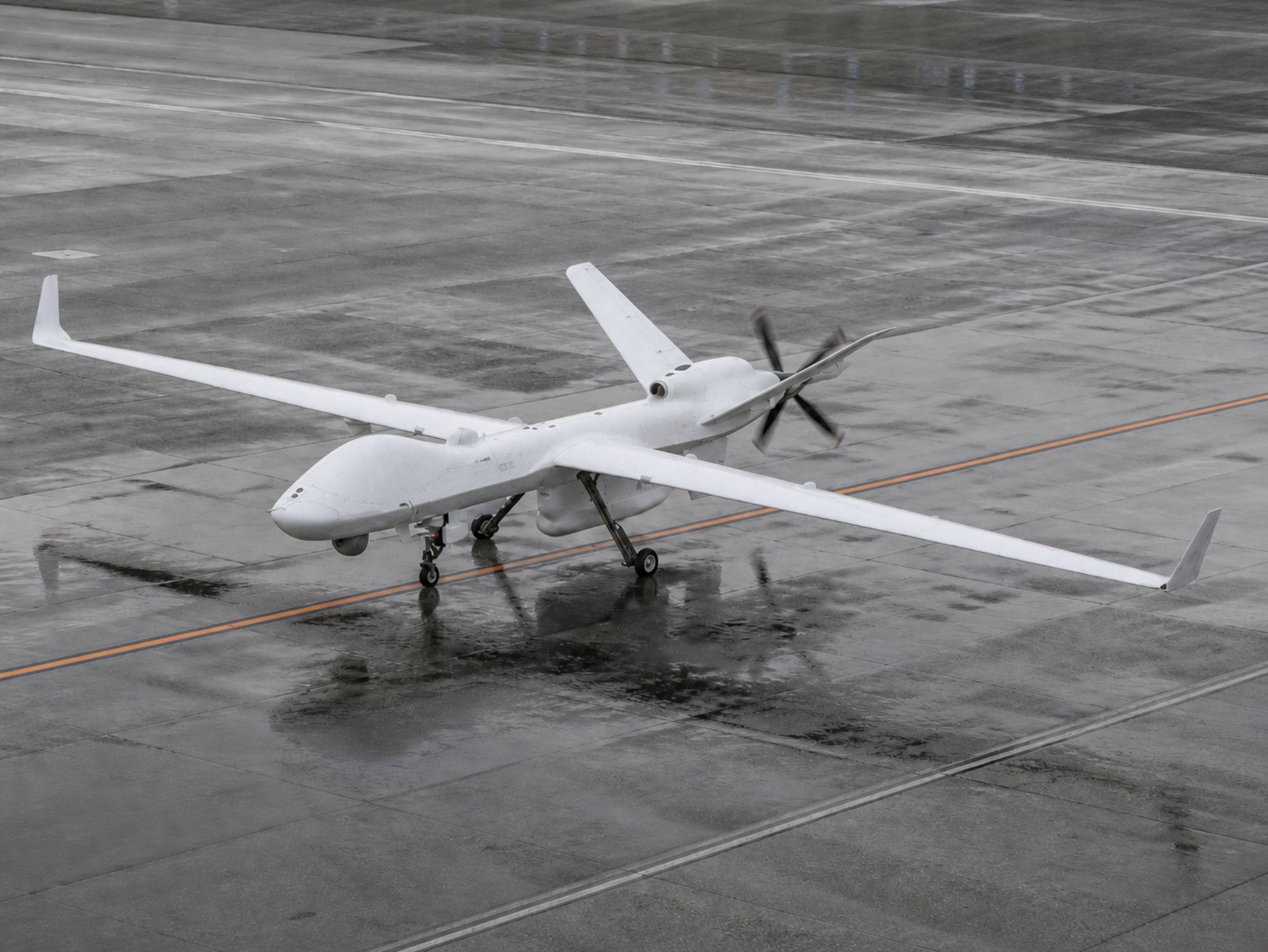
Fixed-wing UAV and defense application environment

UAV And Defense

The current platform is built around UAV Group 2-3 fixed-wing ISR and patrol systems, with extension into fixed-wing VTOL and hybrid paths. Ideal for Long-endurance ISR, perimeter patrol, maritime surveillance, infrastructure monitoring, tactical resupply, and more.

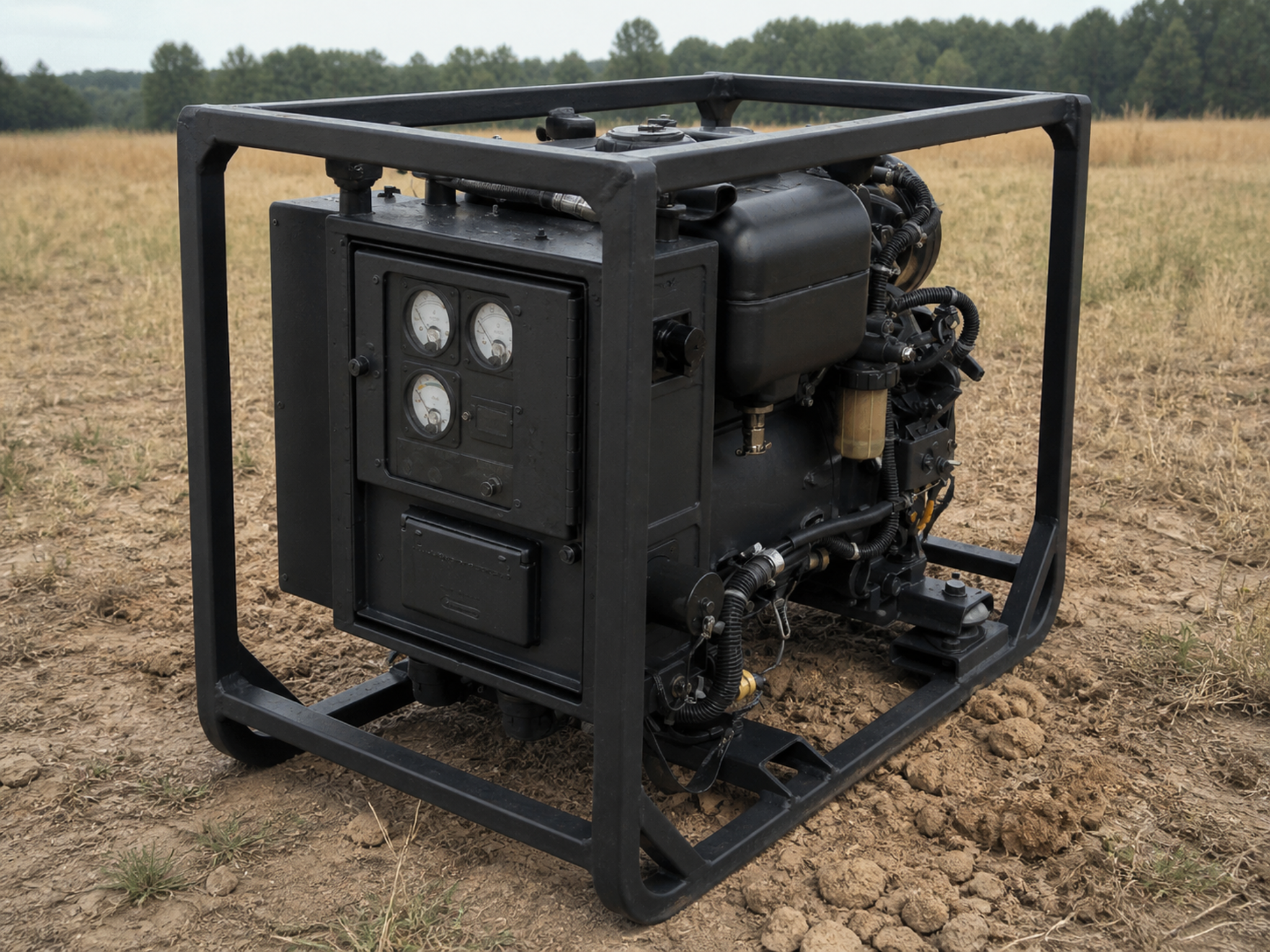
Power generation equipment in a field environment

Power Generation

The platform can be optimized for compact generator-class systems for military and ultra-lightweight remote use. Modular stacking supports fixed or stationary power where output must scale without sacrificing access, redundancy, or installation flexibility.

Select mobility application vehicle in a clean engineering environment

Select Mobility

Select manned applications are possible for support. Early fit belongs in experimental motorcycles, quadricycles, autocycles, airframes, motorgliders, exoskeletons, and select STOL or bush installations.

Eternal Engines runs design, build, test, and configuration control as one internal discipline for production. Engineering decisions stay tied to the hardware being assembled, the data being captured, and the evidence record that follows each configuration.

Engines move through in-house assembly, internal validation, controlled inspection, and documented release. Externally sourced components enter through incoming inspection, validation, and configuration lock before they are accepted into a build.

Design build test hardware and inspection layout

Eternal Engines engages qualified parties pursuing capital, integration, testing, coverage, or strategic alignment. Select the pathway closest to the conversation and provide enough context for the right response.

Strategic Capital

Investment, benefactor, or strategic funding conversations tied to execution, validation, and pilot-scale production.

OEM

Platform, integration, supply, or product-fit conversations with manufacturers and system builders.

Defense

Mission-driven conversations involving fielded systems, sustainment, fuel logistics, endurance, and controlled evaluation paths.

UAV

Fixed-wing ISR, patrol, VTOL, hybrid, and long-endurance unmanned platform integration discussions.

Power Generation

Generator-class, remote-power, stationary, remote deployment, and modular stacking discussions.

Select Mobility

Serious experimental, specialty, and manned-platform conversations involving compact installation, field service, and controlled documentation.

Media

Coverage, interviews, background context, photography, video, or controlled public-facing materials.

Technical Inquiry

Serious technical review, architecture questions, evidence requests, and deeper discussion of platform fit.

Inquiry Intake Form

Technical briefings and controlled materials are available for qualified discussions.

Ignition Architecture

Catalytic Igniters

A standing ignition condition, not a spark attempt.

Eternal Engines catalytic igniters replace momentary spark dependence with a continuously hot, chemically active ignition surface. The plug is being developed to support true multifuel operation across refined light hydrocarbons already common in military and civil use, while improving flame stability, relight probability, start behavior, and operation through poor vaporization, lean mixtures, altitude, wet conditions, transient airflow, and abrupt fueling changes.

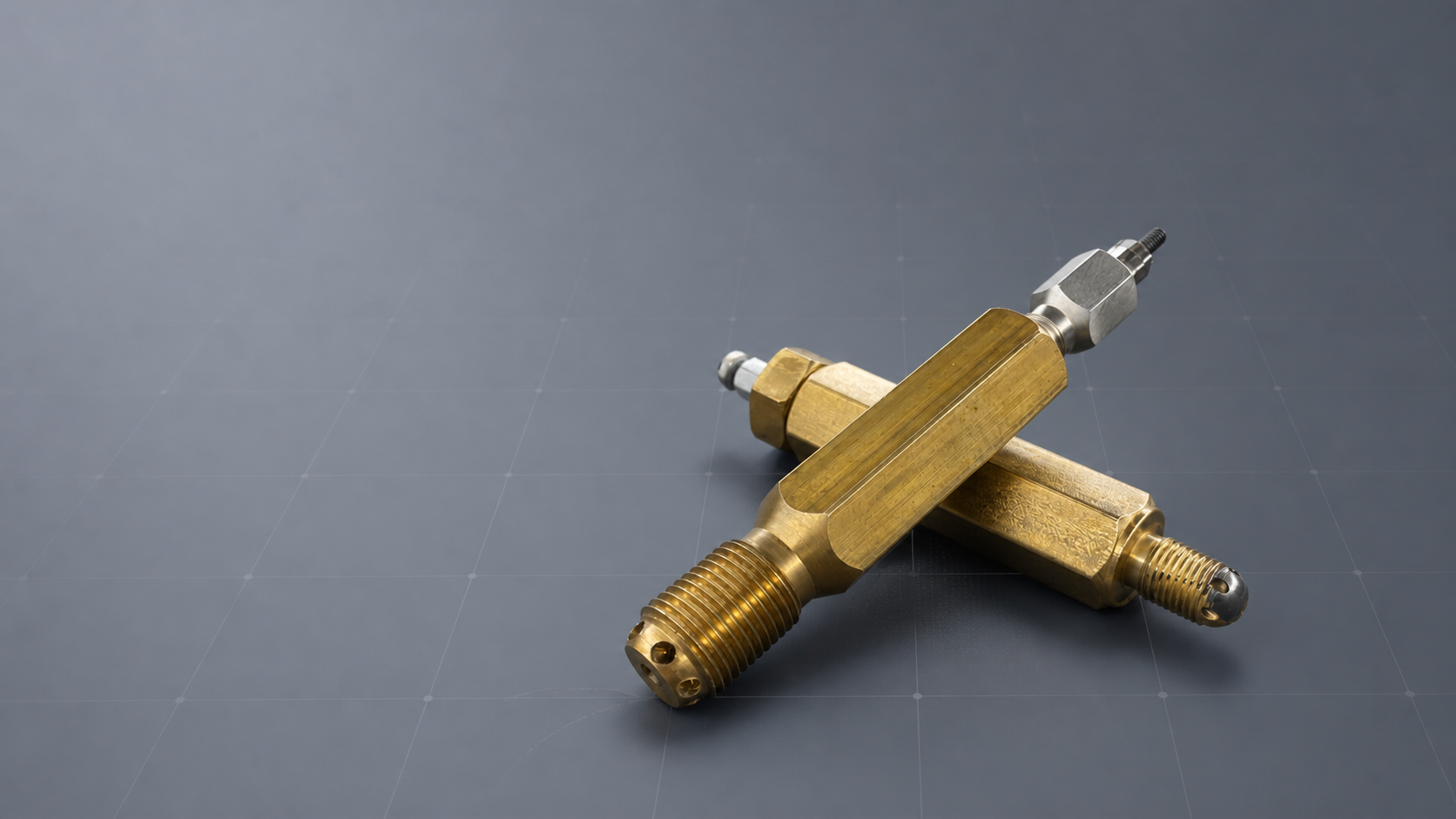
Catalytic igniters arranged as a staged brass product photograph

Conventional ignition depends on a brief electrical discharge creating a small flame kernel that must survive long enough to become durable combustion. That failure point appears at the margins: cold starts, poor vaporization, lean operation, altitude, rain, wetting, rapid airflow changes, abrupt fueling transients, and disturbed combustion.

The issue is not only whether the spark occurs. The critical question is whether the first ignition kernel survives strain, cooling, wetting, and mixture instability. When the kernel is quenched before it anchors, the system must try again from zero.

Failed spark ignition context image for catalytic ignition operating conditions

The igniter stays ready before mixture arrives.

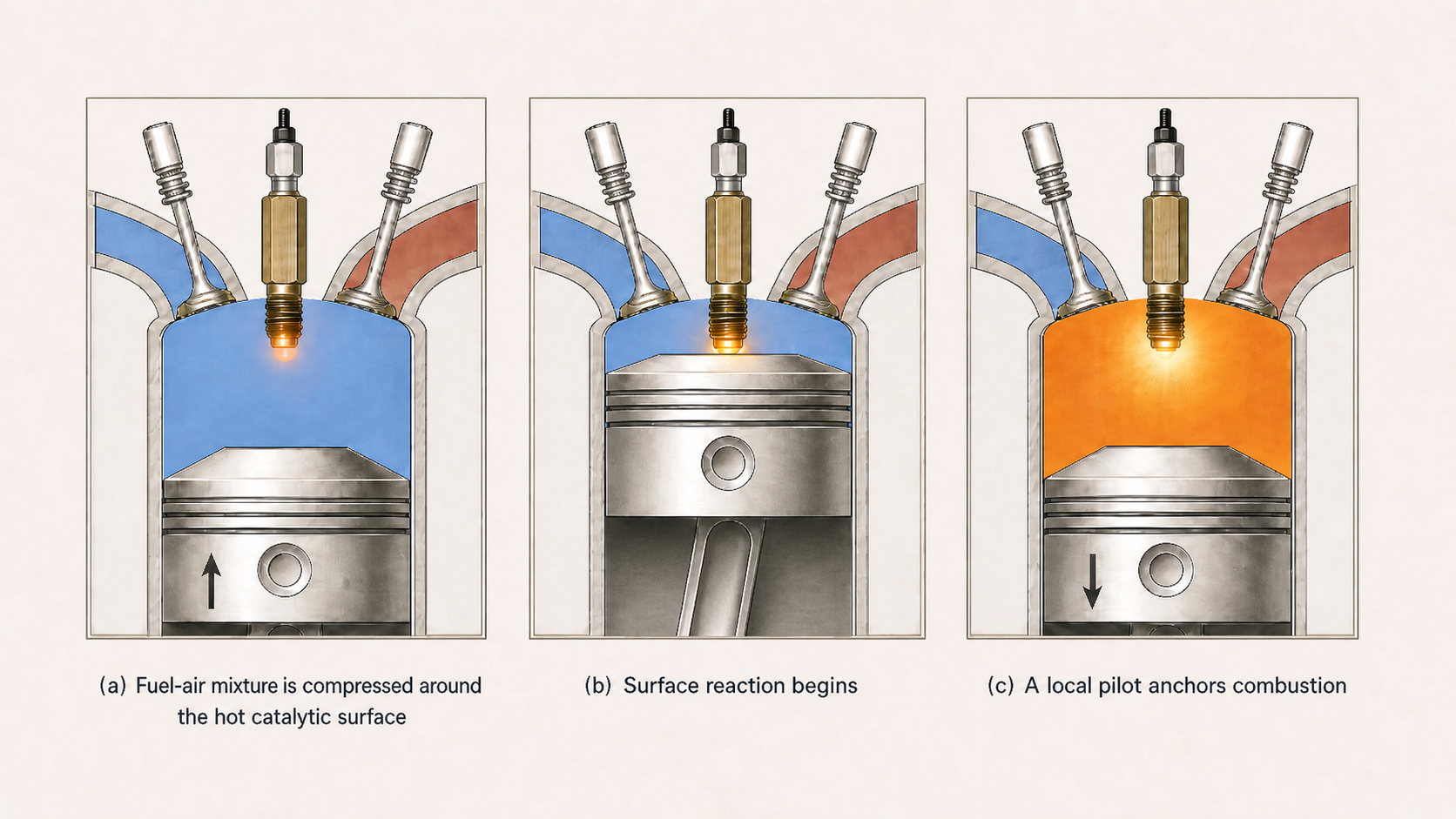
Catalytic ignition changes the ignition event into an ignition condition. The plug maintains a hot catalytic surface that supports reaction when fuel-air mixture reaches it. Instead of asking a single electrical discharge to create and protect a fragile flame kernel, the system places an active ignition site in the combustion environment and keeps it ready.

The result is not a stronger spark. It is surface-initiated combustion. The catalytic surface lowers the local barrier to reaction, supports reactive species near the surface, and gives combustion a persistent pilot point as mixture quality changes around it.

Catalytic ignition core mechanism staged image showing chemically active ignition hardware

Catalytic ignition puts fuel flexibility, start behavior, transient stability, and electrical simplicity on the same architecture.

Value 01

Multifuel Operation

Fuel flexibility begins at ignition.

Catalytic ignition supports true multifuel operation across refined light hydrocarbons already common in military and civil use. The development path includes JP-8/F-34, F-24, JP-5, Jet A/Jet A-1, avgas 100LL, suitable MOGAS, and diesel-range fuels within specification.

Fuel samples and catalytic igniter arranged for multifuel operation

Value 02

Cold Start And Restart Margin

Cold hardware and poor vaporization need more than a brief discharge.

Cold starts and restarts expose weak ignition margin. A continuously hot catalytic surface gives the mixture an active ignition site when temperature, vaporization, and local mixture quality are least favorable.

Catalytic igniter staged to represent cold start and restart margin

Value 03

Lean And Transient Operation

The edge of combustion stability becomes more usable.

Lean operation, abrupt fueling changes, and rapid load transitions can move the mixture away from ideal spark conditions. Catalytic ignition increases practical tolerance by keeping the ignition site active as mixture quality changes around it.

Catalytic igniter bench spread representing lean and transient operation

Value 04

Reduced Electrical Dependence

Ignition can be less dependent on complex electrical hardware.

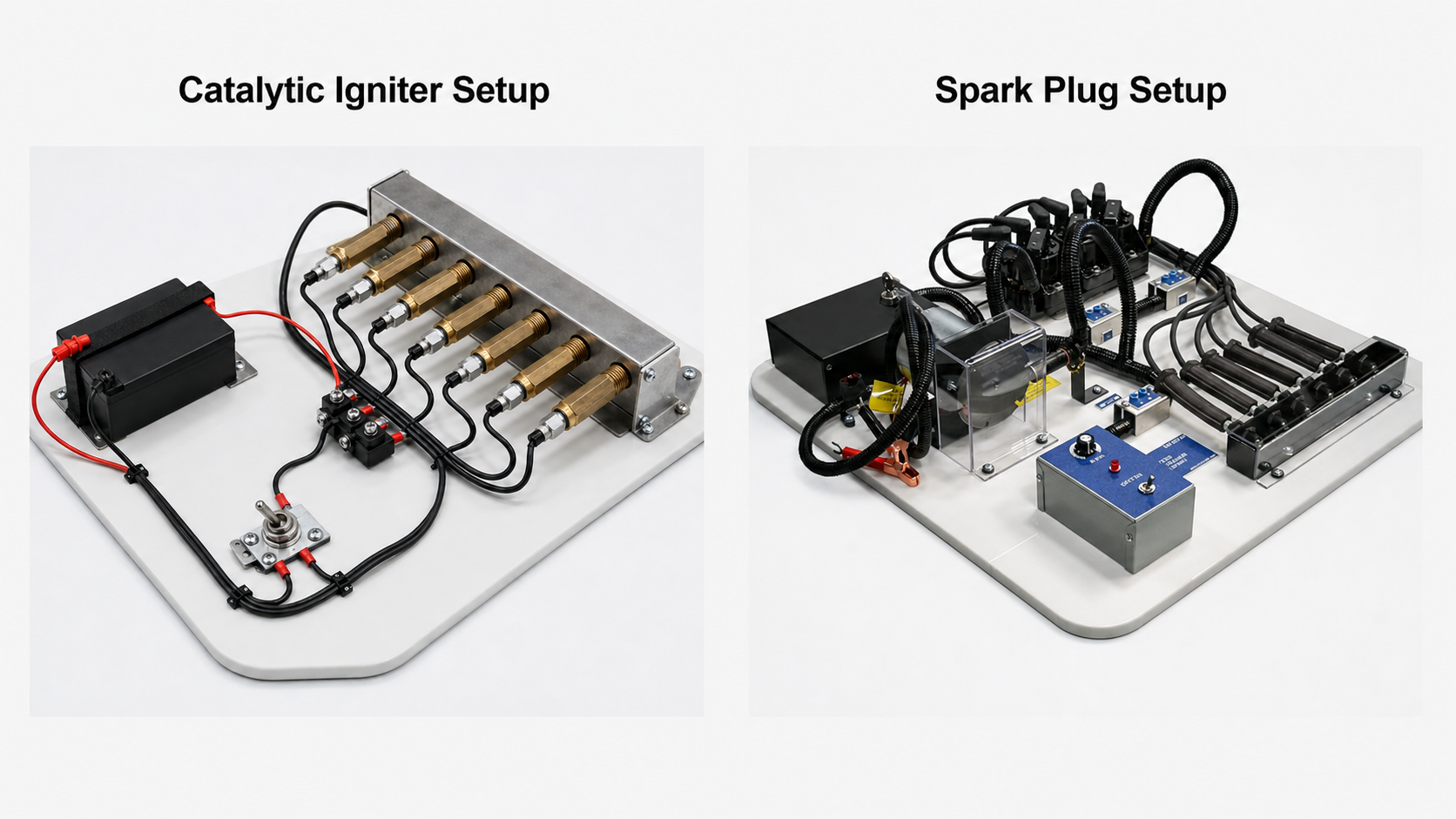
A persistent catalytic ignition condition can reduce reliance on distributor-style hardware, coil-heavy complexity, and fragile spark-only assumptions. The architecture supports a simpler operating logic for platforms where electrical load, service exposure, and field reliability all carry consequence.

Conventional spark hardware contrasted with catalytic igniter hardware

Flameout risk is reduced when the ignition source remains hot, active, and ready before the next combustible mixture arrives.

Spark ignition is vulnerable when combustion is disturbed. Wetting, lean mixture, airflow disruption, cold conditions, altitude, or abrupt fueling changes can extinguish the initial flame kernel or stop combustion entirely. Once that occurs, ignition recovery depends on another brief spark event succeeding under the same unstable local conditions.

Catalytic ignition changes that condition. The plug keeps a hot, chemically active surface in the combustion environment. During a brief upset, that surface can continue acting as a local pilot before the flame is fully lost. If combustion does go out, the next combustible mixture reaches an ignition source that is already active, improving the chance of immediate relight instead of waiting for a new spark kernel to form and survive.

Restart After Flameout

A spark system must create a new flame kernel after combustion has already been lost. Catalytic ignition leaves a retained hot surface in the chamber, so when burnable mixture returns, relight can begin at an ignition point that is already active instead of starting from zero, making re-ignition after avionic flameout consistently possible.

Wet Ingestion

Water, mist, or sudden local cooling can strip heat from the first flame kernel. The catalytic surface helps mitigate flameout by maintaining a hot ignition site as the disturbance clears and the mixture becomes burnable again.

Lean Transient

Fuel-air mixture can pass through a lean or unstable interval during throttle movement, load shift, or airflow change. The plug helps prevent a temporary upset from becoming a full flameout by keeping ignition energy present as mixture quality returns.

The plugs can operate using any hydrocarbon as heavy as or lighter than diesel. Fuel range is centered on refined light hydrocarbons already moved, stored, and understood by military, civil, remote, and fielded operators.

Diesel acts as the upper operating reference. Fuels heavier than diesel are shown to the right as examples outside the intended burn range.

Approximate Liquid Density Scale

Measured at 60°F · lb/gal

5.56.06.57.07.58.08.59.0
Supported Hydrocarbon Range
Heavier Than Diesel / Not Intended
Diesel · 7.1
Avgas 100LL5.9 lb/gal
MOGAS6.1 lb/gal
Jet A / JP-56.7 lb/gal
JP-8 / F-34 / F-246.8 lb/gal
Diesel7.1 lb/gal
Heavy Fuel Oil8.0 lb/gal
Bunker Fuel8.4 lb/gal
Bitumen / Tar8.8+ lb/gal

Supported Direction

MOGAS, avgas 100LL, Jet A / Jet A-1, JP-5, JP-8 / F-34, F-24, and diesel-range fuels within the intended operating range.

Outside Intended Range

Representative heavier examples include heavy fuel oil, bunker fuel, and bitumen-class hydrocarbons beyond diesel.

The scale shows approximate fuel density to illustrate the intended operating range. Fuels at or lighter than diesel fall inside the supported hydrocarbon window. Heavier examples to the right of diesel illustrate classes not intended for operation.

The catalytic igniter is designed as a plug-format ignition device. It does not require a rebuilt engine architecture to be integrated. In piston applications, it can install in the spark plug port and operate from a 12V power connection.

The technology functions as an ignition upgrade path rather than an engine redesign. The plug changes the local ignition condition while preserving the surrounding engine architecture. Engine-specific validation continues to control final fit, thermal behavior, fuel compatibility, and operating envelope.

Catalytic igniter integration photograph showing plug-format installation context

Eternal Engines engages qualified technical, defense, UAV, OEM, power-generation, and strategic parties evaluating ignition architecture, flameout recovery, relight reliability, multifuel operation, start behavior, and platform integration.

Technical Review

Ignition architecture, operating envelope, relight behavior, and platform-fit discussions.

Defense / UAV

Fielded-system conversations involving fuel logistics, flame stability, relight margin, and integration paths.

OEM Integration

Plug-format evaluation, engine-specific validation, and controlled application discussions.

Power Generation

Compact power discussions involving generator-class systems, remote operation, fuel range, and ignition reliability.

Strategic Capital

Capital conversations connected to catalytic ignition development, testing, and platform expansion.

Media

Press, technical coverage, interview, and publication discussions requiring controlled public-facing context.

Ignition Inquiry Intake

Technical briefings and controlled materials are available for qualified discussions.